
Navigating GOLPP: How Rehabilitation Can Give Your Senior Dog Their Groove Back
If you are the proud parent of a senior dog, especially a larger breed like a Labrador or Golden Retriever, you might have started noticing some subtle changes. Maybe their breathing has become a little louder or raspier. Perhaps you’ve heard the distinct "scuff, scuff, scuff" of their hind toenails dragging on the pavement during walks, or noticed they seem a bit wobbly when getting up from a nap.
It’s easy to write these signs off as "just getting old," but they are often the hallmark symptoms of a specific condition known as GOLPP—Geriatric Onset Laryngeal Paralysis Polyneuropathy.
At Resurgence Veterinary Mobility, we hold a special place in our hearts for senior dogs. We know that navigating a GOLPP diagnosis can feel overwhelming, but we want you to know one vital thing: there is so much we can do to help.
Here is everything you need to know about GOLPP and how a customized physical rehabilitation journey can protect your dog’s quality of life.
What is GOLPP? (It’s More Than Just Breathing)
For a long time, veterinarians focused primarily on the "Laryngeal Paralysis" part of this condition: the loud breathing, the coughing after drinking water, and the reduced tolerance for heat. This happens because the nerves controlling the flaps of the voice box slowly degrade, restricting the airway.
However, modern veterinary medicine now recognizes the "Polyneuropathy" (PN) piece of the puzzle. GOLPP doesn't just affect the nerves in the throat; it affects the longest nerves in the body, which happen to run all the way down to the hind legs.
Think of your dog's nervous system like the electrical wiring in a house. In GOLPP, the signal traveling from the brain to the back legs gets weak or scrambled. This leads to:
Muscle wasting in the hind end.
Dragging of the back paws (knuckling).
Loss of balance (proprioceptive deficits).
Compensatory pain (because the front legs have to work overtime!).
While surgery (like a "tie-back" procedure) can be a literal lifesaver for the breathing aspect of GOLPP, surgery does not fix the hind-end weakness. That is exactly where physical rehabilitation steps in.
The Resurgence Approach: How Rehabilitation Helps
Because GOLPP is a progressive, degenerative condition, our goal isn't to cure it, but to fiercely protect your dog's independence, comfort, and mobility for as long as possible.
We take a highly individualized approach to every patient. When you come in for an Initial Exam, we will map out a custom game plan that may include:
1. Therapeutic Exercise (Neuromuscular Re-education) We use targeted, low-impact exercises to essentially remind the brain how to talk to the back legs. By practicing specific movements over obstacles, on balance equipment, and through weight-shifting exercises, we help maintain those crucial nerve pathways and prevent rapid muscle loss.
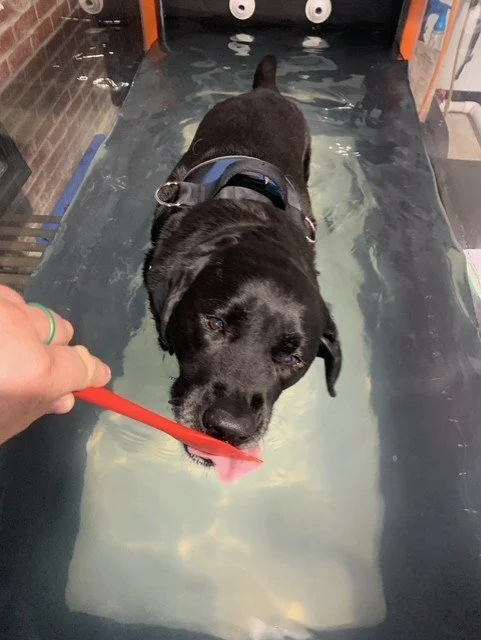
2. Underwater Treadmill (UWTM) Therapy The underwater treadmill is a game-changer for GOLPP dogs. The buoyancy of the warm water supports their weakened hind end, preventing them from falling, while the resistance of the water helps build muscle mass safely. Note: For our GOLPP patients, we monitor breathing and fatigue with extreme vigilance, ensuring every session is safe, stress-free, and perfectly paced.
3. Compensatory Pain Management When the back legs are weak, a dog will shift up to 80% of their body weight onto their front legs, neck, and shoulders. This leads to massive muscle tension and joint pain! We utilize evidence-based modalities like Acupuncture, Laser Therapy (PBMT), and Massage Therapy to melt away this compensatory pain, keeping them comfortable and happy.
4. Strategic Joint & Nerve Support We don't just treat the outside; we support the inside. We guide you through targeted, evidence-based supplementation (like Omega-3s for nerve health and joint support) and work alongside your primary veterinarian to ensure any pain medications are perfectly tailored to your dog's needs.
An Investment in the "Quality of Years"
We understand that committing to a weekly rehabilitation program is a significant investment of your time, emotion, and finances. In today's world, we do not take that lightly.
However, we firmly believe that your dog's golden years are a privilege. Rehabilitation isn't just about making them walk a little better; it’s about preserving their dignity so they can still make it to the backyard to go to the bathroom. It's about keeping them comfortable enough to still enjoy their favorite puzzle toy or cuddle on the couch. It’s an investment in the quality of their remaining years.